
Search “semi husked coconut wholesale price” and most of what comes back is a marketplace directory quoting whatever a supplier typed into a form last month, or a blog post written to rank rather than to help you buy. This one’s neither. CelebesAgro ships semi husked coconut from its own plantation, and this is the same price conversation we have with buyers before every quote goes out.
FOB prices for semi husked coconut generally run $350 to $450 per metric ton across the market, but that range hides more than it reveals. The real number for your order depends on nut weight, MOQ, whether you’re quoted FOB or CIF, packaging format, and the time of year you’re buying.
What Drives Semi Husked Coconut Wholesale Price
Five things move the number more than anything else. None of them are secret. Most quotes just don’t explain them.
Weight per piece
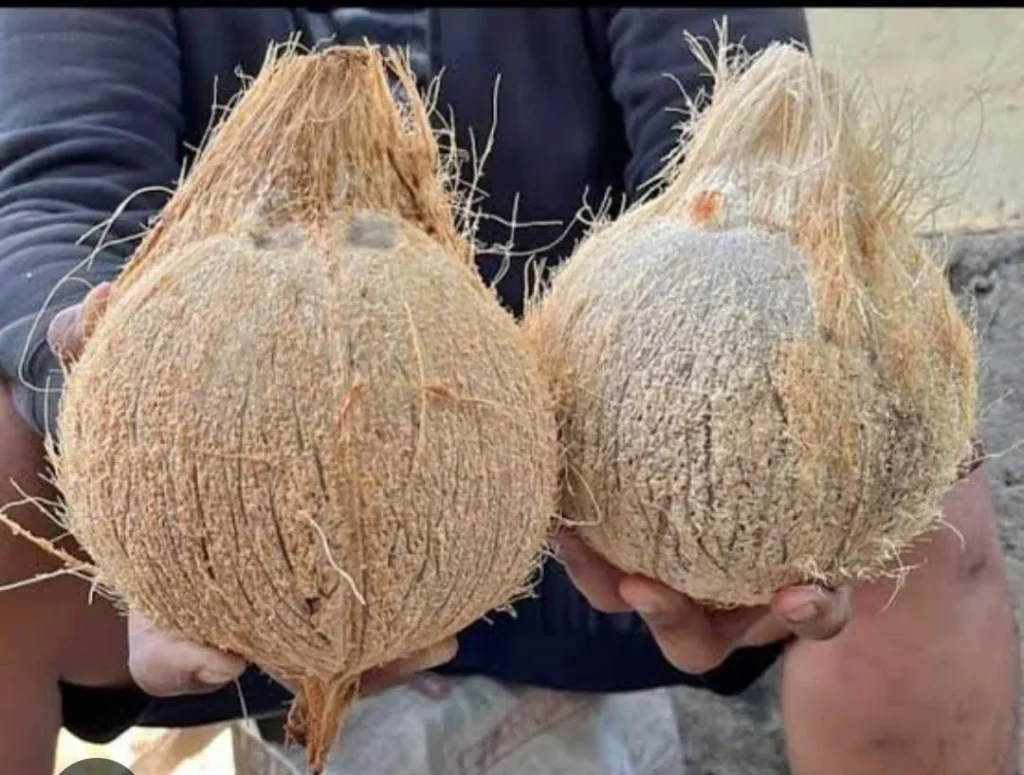
CelebesAgro’s semi husked coconuts run 0.7 to 1.3 kg per piece. Here’s the part that surprises a lot of first-time buyers: heavier doesn’t automatically mean better value. A 1.3 kg nut carries a thicker husk relative to its size than a 0.7 kg one, and if you’re buying for the meat or water inside, that extra husk is weight you’re paying for and then stripping off anyway. Some buyers pay a premium for the heavier end of the range on purpose, because the thicker husk protects the nut better over a long ocean voyage. Others deliberately ask for the lighter end because they’d rather not pay freight on husk they don’t need. Neither answer is wrong. It depends on what happens to the coconut after it lands.
MOQ and container fill
Most suppliers price by the container, not the kilogram, because a partial load rarely makes financial sense once you account for freight per unit. Ask for less than a full container and you’ll usually get a worse rate per ton, not a better one, since the fixed costs of loading, documentation, and port handling don’t shrink just because your order does. A buyer asking for 5 tons and a buyer asking for a full 20ft load are drawing from the same fixed-cost pool, and the smaller order carries more of it per ton.
FOB vs CIF terms
These two numbers aren’t the same thing wearing different labels, and mixing them up is the single most common way buyers end up comparing quotes that were never comparable in the first place. There’s a full section on this below, because it deserves one.
Packaging format
Bagged coconuts (usually 20 to 25 per breathable sack) cost more to pack than bulk-stacked loose in the container, but they also survive handling better at the destination port. Bulk stacking is cheaper up front and riskier if the shipment gets transferred more than once before it reaches the buyer.
Seasonal supply
Coconut harvest volume isn’t flat all year. When regional supply tightens, usually during the wetter months, prices firm up across the board, not just at any one supplier. A quote you got in July won’t necessarily hold in November, and a supplier who won’t say why a number moved between two inquiries is usually hiding a broker-side shortage rather than a genuine cost increase.
FOB vs CIF: Which Number Are You Actually Comparing?
FOB (Free on Board) covers the product up to the point it’s loaded onto the vessel at the export port. CIF (Cost, Insurance, Freight) adds ocean freight and marine insurance on top, so it’s always the higher number for the same shipment, sometimes by a wide margin depending on the destination.
Here’s where buyers get burned. Two suppliers can quote what looks like the same price, and one is FOB while the other is CIF, and if you don’t catch the difference you’ll think one supplier is dramatically cheaper when really you’re comparing two different services. We’ve seen buyer inquiries come in referencing a “great price” pulled from a competitor’s page, only for the number to fall apart once they realize it was FOB and their own budget was built assuming CIF. Before you compare any two quotes, confirm the trade term on both. It takes one question, and it saves you from a spreadsheet that’s wrong in a way you won’t notice until the invoice arrives.
Container Math: What a 20ft or 40ft Load Actually Costs
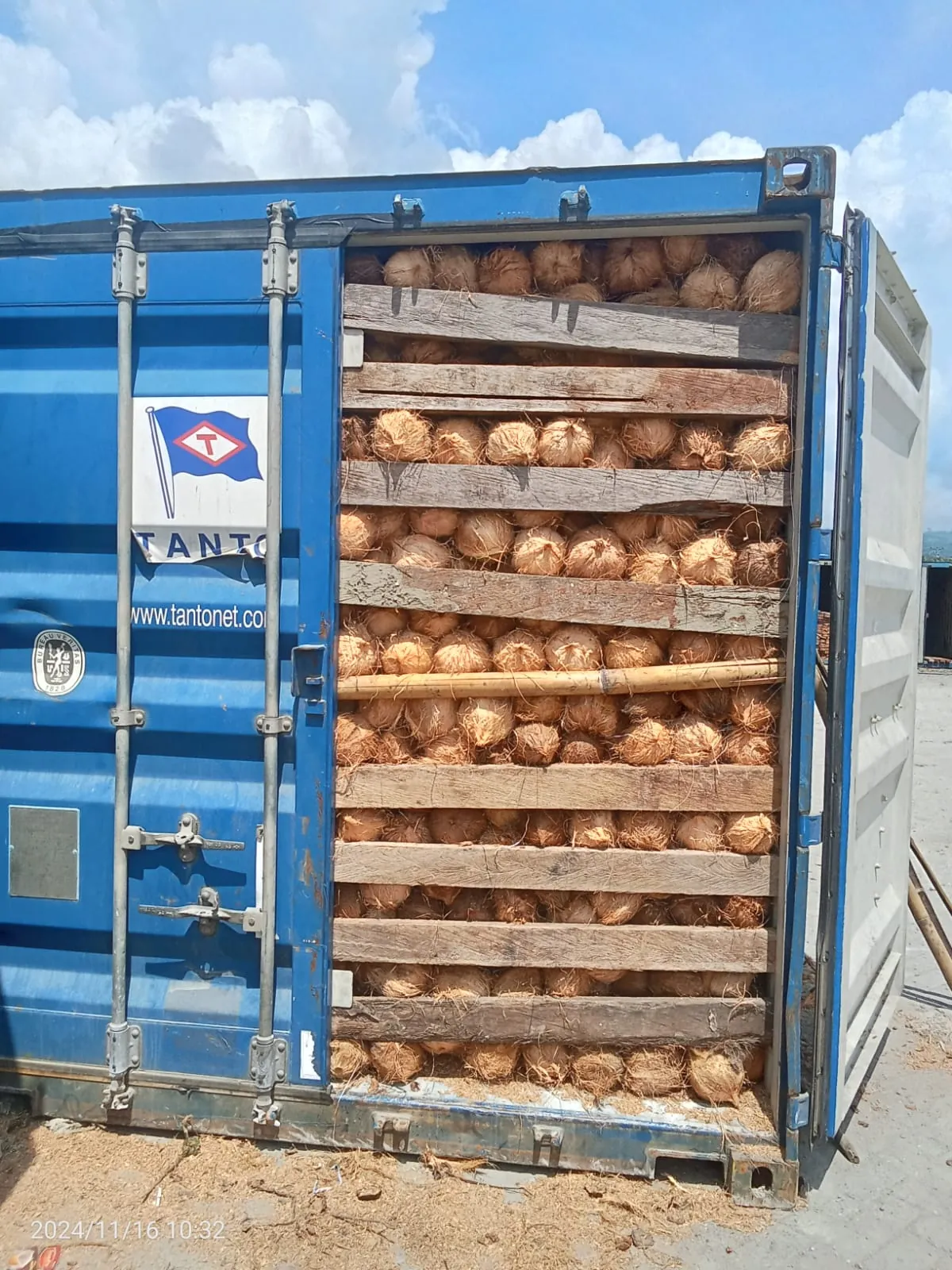
A standard 20ft container holds roughly 13 metric tons of semi husked coconut. A 40ft holds roughly 28 metric tons. Here’s how to turn that into a piece count you can actually plan around, using CelebesAgro’s real 0.7 to 1.3 kg per piece range:
- 20ft container: roughly 10,000 pieces at the heavier end (1.3 kg) up to roughly 18,500 pieces at the lighter end (0.7 kg)
- 40ft container: roughly 21,500 pieces at the heavier end up to roughly 40,000 pieces at the lighter end
That’s a wide spread for a reason: it’s the same weight-per-piece factor from the section above, just showing up as a number you can put in a shipping plan. We’re not going to hand you a total container price here, because doing that honestly would mean either quoting the widest possible range (which tells you almost nothing) or picking one scenario and hoping it matches your order (which is worse). Take the FOB or CIF rate you’re quoted, apply it to the metric tonnage above, and you’ve got a real number for your specific order rather than a guess dressed up as a quote.
Price Per Bag vs. Price Per Ton: Reconcile the Two Before You Compare
Some quotes come per bag. Others come per metric ton. They’re supposed to describe the same shipment, but the two numbers don’t always agree once you actually run the math.
A standard export bag holds 20 to 25 pieces and weighs somewhere around 13 to 15 kg, depending on the size mix inside it. At the market FOB range of $350 to $450 per ton, which works out to $0.35 to $0.45 per kg, that bag should land somewhere around $4.55 to $6.75. If a per-bag number you’ve been quoted sits well outside that range, one of two things is going on: the per-ton and per-bag figures weren’t actually describing the same trade terms, or someone rounded loosely enough on one side that the two numbers stopped agreeing with each other. Either way, it’s worth a follow-up question before that number goes into your budget.

Why CelebesAgro Quotes Instead of Publishing a Fixed Price
We used to think buyers wanted a number on the page above anything else. Turns out what they actually want is a number they can trust, and right now we can’t publish one that would hold up. Packaging format and exact diameter specs for semi husked coconut are still being finalized on our end. Post a fixed price against specs that might change and you either mislead the buyer who took it at face value, or you’re back here revising the page every few weeks. Neither is honest.
What we can offer instead is speed and consistency. CelebesAgro grows its own coconuts on a 1,300-hectare plantation, not through a rotating cast of smallholder brokers, and we’re set up to supply around 10 containers a month. That combination means a quote request doesn’t sit in a queue while someone checks whether stock exists this week. It also means the number you get today and the number you’d get from the same order next month won’t swing wildly just because a broker’s supply dried up. Ask, and you’ll usually have a real number within a day or two, tied to your actual weight, packaging, and destination, not a range copied from a directory listing.
How to Place a Bulk FOB Order
Understanding what moves the price is half the problem. The other half is knowing what actually happens between “we agree on a number” and “the container leaves the port.” Here’s the sequence, FOB terms specifically, since that’s what most repeat buyers end up using once they have their own freight forwarder in place.
- Confirm the spec, not just the price. Tell us the weight range you want (0.7 to 1.3 kg covers our full range, but most buyers pick a tighter band), bagged or bulk-stacked, and your destination port. A quote without this attached isn’t a real quote yet.
- Get the FOB number tied to a container size. We quote per metric ton, but ask for it translated into a 20ft or 40ft total so you’re comparing against your own freight costs on an apples-to-apples basis.
- Agree payment terms. Most first-time buyers go with a deposit by T/T (telegraphic transfer) to confirm the order, with the balance due before the container is loaded. Larger or repeat orders sometimes move to L/C (letter of credit) once there’s a payment history between both sides.
- Book your own freight forwarder. FOB means we get the coconuts to the vessel at the Indonesian port; everything from there, ocean freight, insurance, destination handling, is arranged on your end. If this is your first FOB order, start that conversation with your forwarder before you lock in a shipping date, not after.
- Confirm the loading and inspection window. We’ll give you a realistic loading date once the order is confirmed, and can coordinate a Sucofindo pre-shipment inspection if your destination market requires one.
None of this is unusual for a bulk FOB order. It’s just rarely written down anywhere, which is why first-time buyers often find out about step 4 the hard way, after the product is ready and no one has booked a vessel slot.
What to Check Before You Trust Any Quoted Price
Whether you’re getting a number from us or anyone else, run it through this before you build a budget around it:
- Does the quote say FOB or CIF? If it just says “price” with no term attached, ask. A number with no trade term isn’t a quote, it’s a placeholder.
- Is it quoted against a specific weight or grade basis? A vague per-ton average that could apply to almost any nut size tells you less than it looks like it does.
- Does it specify bagged or bulk-stacked packaging? The cheaper of the two on paper isn’t cheaper if it arrives with more breakage than your route can tolerate.
- Is the MOQ a full container, or a partial load? A lower headline number on a partial load often hides a higher effective rate once freight is spread across less cargo.
- Does the price include pre-shipment inspection and certification? A Sucofindo quality check or similar third-party inspection sometimes shows up as a separate line item once the paperwork actually starts, not folded into the number you were first quoted.
If you want the deeper breakdown on packing methods (bulk-stacked versus bagged, and what each one means for a container crossing 20 to 40 days of open water), we cover that in Semi Husked vs. Fully Husked Coconut rather than repeating it here.
Want a real number for your own order? Message us on WhatsApp with your target weight, packaging preference, and destination, and we’ll get back to you with a quote instead of a range.
Frequently Asked Questions
What’s the difference between FOB and CIF price for semi husked coconut?
FOB covers the coconut up to loading at the Indonesian export port. CIF adds ocean freight and marine insurance to your specific destination, so it’s a higher number for the exact same product. Always confirm which term a quote uses before comparing it against another supplier’s number.
Why doesn’t CelebesAgro list a fixed price online?
Because packaging format and exact size specifications are still being finalized, and publishing a fixed number against specs that might change would either mislead buyers now or need constant revision later. We’d rather give you an accurate number tied to your actual order than a stale one that looked good on the page.
What’s the minimum order quantity for semi husked coconut?
Most suppliers, CelebesAgro included, price around a full container load, either a 20ft or 40ft unit, because partial loads carry disproportionately high freight costs per ton. If you need a smaller volume, ask directly. The answer depends on current production scheduling.
What factors most affect the price per ton?
Nut weight and grade basis, MOQ and container fill, whether the quote is FOB or CIF, packaging format, and seasonal supply. Of those, the FOB versus CIF mix-up causes the most confusion when buyers compare quotes from different suppliers side by side.
How quickly can I get an accurate quote?
Usually within a day or two, once you’ve told us the weight range, packaging preference, and destination you need. Because we supply from our own 1,300-hectare plantation rather than a rotating broker network, we’re not waiting on someone else’s stock check before we can answer you.