
Ship coco bristle out of Indonesia with the wrong HS code on the paperwork, and customs won’t just slow the container down. They’ll ask why a shipment declared as “coir fiber” doesn’t match the “bristle” description sitting on the invoice. CelebesAgro exports coco bristle from its own sourcing (see our Coco Bristle page for specs), and this is the same documentation conversation we walk buyers through before a shipment leaves port.
The primary HS code for coco bristle is 53050010, though some shipments get classified under 53050021 or 53050090 depending on how the fiber is graded. Beyond the code, a standard shipment needs five documents: Commercial Invoice, Packing List, Bill of Lading, Certificate of Origin, and a Phytosanitary Certificate.
What Documents a Coco Bristle Shipment Needs
Commercial Invoice
Buyer, seller, product description, quantity, unit price, and trade term, all in one document customs uses to assess duty and your bank uses to process payment. For coco bristle specifically, the product description matters more than it would for a simpler commodity. “Bristle fiber for brush manufacturing” tells customs something specific. “Coir fiber” tells them almost nothing, and that gap is exactly where problems start (more on that below).
Packing List
Bale or bag count, net and gross weight, container number, and any marks on the cargo. Customs checks this against the physical shipment, so if your invoice says one product description and your packing list says another, that’s a mismatch someone will notice.
Bill of Lading
Issued by the shipping line once the cargo is actually on board, this is what lets you, or your bank under a letter of credit, take possession of the shipment at the destination. It needs to agree with the invoice and packing list on quantity and description.
Certificate of Origin
Proof the bristle was produced in Indonesia, issued by a local chamber of commerce. It matters for duty treatment in some markets, and it needs the same product description as everything else in the document set. Three documents, three slightly different phrasings of what’s in the container, and you’ve built yourself a customs question nobody asked for.
Phytosanitary Certificate
Coco bristle is a plant-derived material, so most countries want confirmation it’s free of pests and contaminants before they’ll release it. Indonesia’s plant quarantine authority (BARANTAN) issues this after inspecting the shipment. Without it, expect the container to sit while someone arranges fumigation or a re-inspection.
Getting the HS Code Right: Coco Bristle Isn’t Just “Coir Fiber”
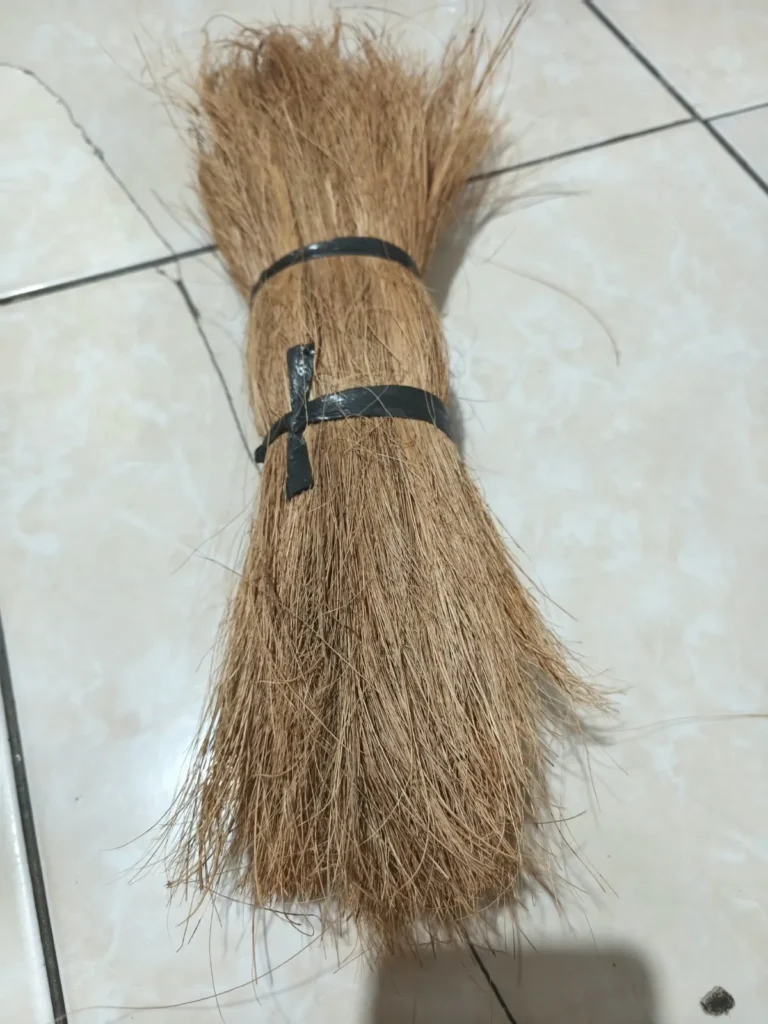
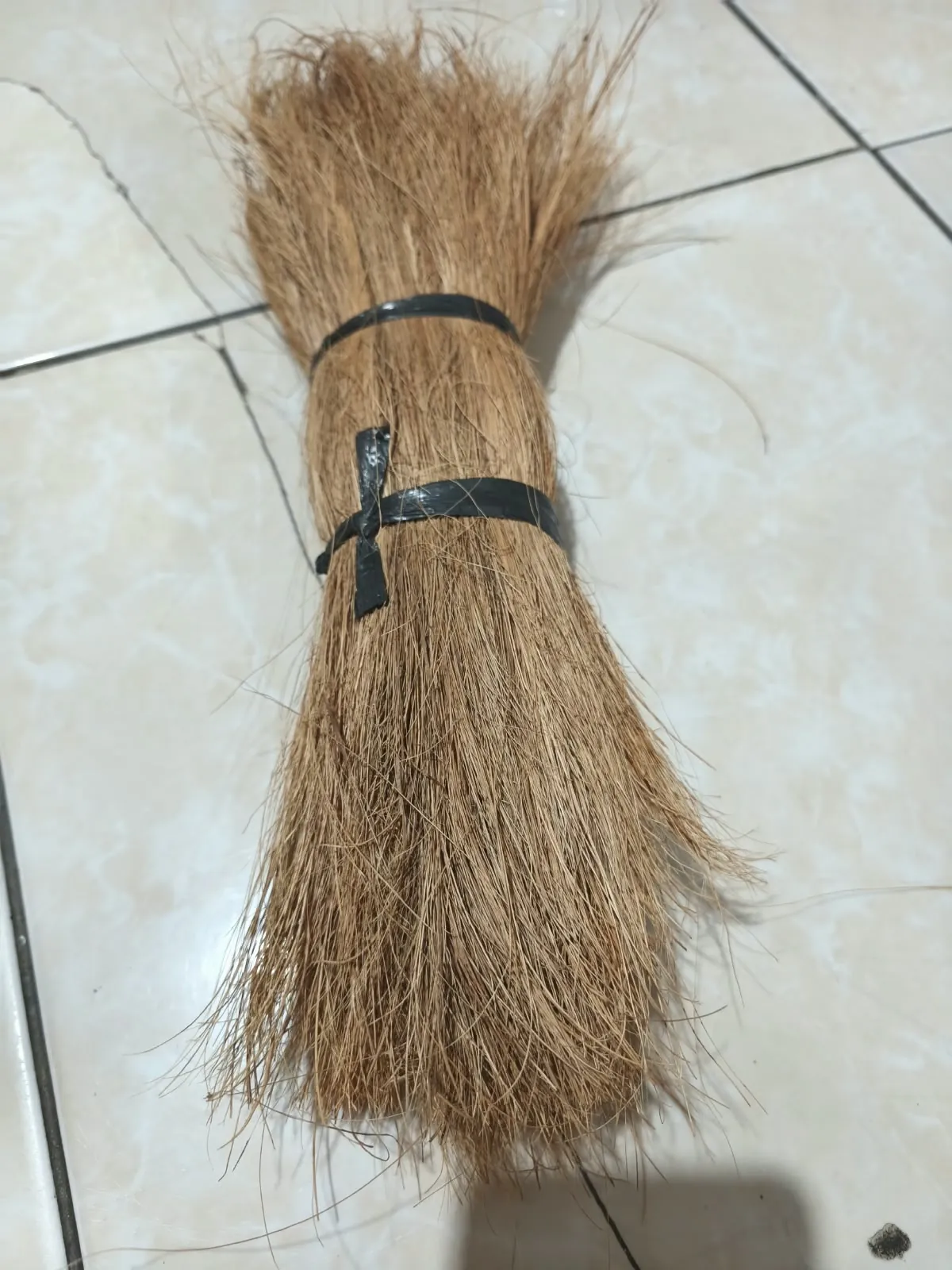
HS heading 5305 covers coconut and coir fiber broadly, which sounds simple until you realize it’s covering two genuinely different products under one umbrella. Coco bristle is the long, stiff fiber used for brushes and brooms. There’s also a shorter, curled coir fiber used for mattress padding, geotextiles, and erosion mats, and it sits under the same broad heading even though it’s processed differently and sold into a completely different market.
We used to think the HS code was a customs broker’s problem, not ours to explain. Then a buyer’s shipment got flagged for exactly this reason: the invoice said “bristle,” the declared subheading matched a shorter coir fiber grade, and a customs officer on the receiving end wanted to know which one was actually in the container. It wasn’t a fraud question. It was a paperwork question that took two days to resolve because nobody had specified the grade clearly enough on the first pass.
If your shipping description just says “coir fiber” without specifying bristle, and the buyer’s customs authority is used to seeing that phrase attached to the shorter, mattress-grade material, you can end up with a document that technically isn’t wrong but doesn’t match what a customs officer expects to see. That’s usually enough to trigger a manual check, even when the product itself is exactly what was ordered.
This isn’t a minor classification footnote, either. Indonesia is one of the largest exporters of coir fiber products under this HS heading globally, second only to Sri Lanka by shipment volume on some trade-data readings. A heading that busy, covering that much variation in what actually ships under it, is exactly the kind of code where a vague description gets noticed.
What CelebesAgro Prepares as the Exporter
CelebesAgro sources coco bristle through our own 1,300-hectare plantation and a small number of vetted local partners, not through a rotating chain of smallholder processors and traders. That matters for documentation the same way it matters for the product itself: when we write “bristle” on an invoice, it’s because we know exactly what husk it came from and how it was processed, not because we’re relaying a description from three hands up the supply chain.
On the inspection side, we work with Sucofindo for pre-shipment quality and quantity verification, the same third-party body most Indonesian exporters use to confirm what’s on the packing list is what’s actually in the container. We’re set up to supply around 10 containers a month, which means the same documentation process runs the same way on order twelve as it did on order one. Consistency in the paperwork isn’t a separate skill from consistency in the product. They come from the same place: knowing your supply chain instead of assembling it fresh for every shipment.
That consistency also shows up in how we write the shipping description itself. Because we’re not relaying a grade description that passed through a trader’s hands before reaching us, we can commit to specific, repeatable wording on the invoice and Certificate of Origin every time, rather than whatever phrasing happened to come with that particular lot. Small detail, but it’s the detail that keeps a buyer’s third shipment as boring, paperwork-wise, as the first one.
If you want the product specs behind this (grading approach, common applications, packaging), those live on our Coco Bristle product page.

What You Still Need to Arrange on Your End
Some of this paperwork is on the buyer, not the exporter, and it’s worth saying plainly rather than letting you find out later.
Import permits or licenses. Depending on your country, importing plant-derived fiber may require an agricultural import permit or registered importer status. That’s tied to your business registration in your own country, so no exporter can obtain it on your behalf.
Biosecurity clearance. Even with a valid Indonesian phytosanitary certificate, your destination’s plant protection agency may run its own inspection on arrival. Rules here shift, sometimes yearly, so check with your local agency or customs broker before the shipment leaves rather than after.
Customs broker coordination. Someone on your end needs the full document set in hand, matched against what your broker’s system expects, before the container arrives. A perfect Certificate of Origin doesn’t help if it lands on your broker’s desk two days after the ship has already docked.
Common Mistakes That Delay a Coco Bristle Shipment
Most of the delays we’ve seen trace back to one of four things, and none of them are actually about the fiber itself.
Grade misdeclared as generic coir fiber. The exact confusion covered above: writing “coir fiber” instead of specifying bristle grade, which can put your shipment’s paperwork at odds with what a customs system expects for that HS subheading.
Description mismatch across documents. The invoice says “coco bristle,” the Certificate of Origin says “coconut fiber,” and the packing list says something else again. Each phrase might be technically defensible on its own, but three different wordings on three documents that are supposed to describe the same shipment reads as inconsistency, not synonym use.
Missing HS subheading detail. Leaving the subheading vague, or letting a freight forwarder pick one without confirming it against the actual grade shipped, hands a customs officer a reason to ask questions that a specific, correct code would have preempted.
Lab or grading documentation the buyer expected but never received. If a buyer asked for confirmation of fiber grade or cleanliness and the paperwork that shows up doesn’t address it, that gap tends to surface at the worst possible time, during a dispute over a shipment that already landed, rather than before it left port.
A container flagged over any of these doesn’t clear in an afternoon. Expect it to sit at port anywhere from a few days to two weeks while someone corrects and resubmits the paperwork, and every one of those days adds a demurrage charge on top of whatever delay hits your own downstream schedule. None of that is about the quality of the fiber. It’s a wording problem that should have been caught before the container left Indonesia.
If you’re putting together a document checklist for your own import, message us on WhatsApp and we’ll walk through what your specific shipment needs.
Frequently Asked Questions
What is the HS code for coco bristle fiber?
The primary code is 53050010. Depending on grade and how a specific customs authority classifies it, some shipments fall under 53050021 or 53050090 instead, all within the broader 5305 heading for coconut and coir fiber.
What’s the difference between coco bristle and regular coir fiber for HS classification purposes?
Coco bristle is the long, stiff fiber used in brushes and brooms. Regular coir fiber, shorter and more curled, goes into mattress padding and geotextiles. Both sit under HS heading 5305, so the shipping description needs to specify which one you’re exporting, or the paperwork can end up mismatched with the declared subheading.
Does coco bristle need a phytosanitary certificate?
Yes, in most cases. It’s a plant-derived material, and most countries want confirmation it’s free of regulated pests before releasing it at the border. Indonesia’s plant quarantine authority issues this after inspecting the shipment.
What happens if a coco bristle shipment is misclassified?
At minimum, expect a manual inspection and a delay while the correct classification gets confirmed. In practice that can mean the container sitting at port for days while demurrage charges accrue, even when the product itself matches what the buyer ordered.
How long does it take to prepare export documents for coco bristle?
For a supplier with organized sourcing records, the phytosanitary certificate and Certificate of Origin can usually be issued within a few working days of the shipment being ready. It takes longer if quarantine needs to schedule a physical inspection during a busy export period, so build a buffer into your timeline rather than assuming next-day turnaround.