
Anyone sourcing raw material for brush or broom manufacturing eventually runs into the same fork: natural coco bristle, or synthetic fiber like nylon or polypropylene. Both work. They just work differently, and the right answer depends on what you’re actually building, where it’s going to be used, and how the finished product needs to perform once it’s out of the factory.
What Is Coco Bristle?
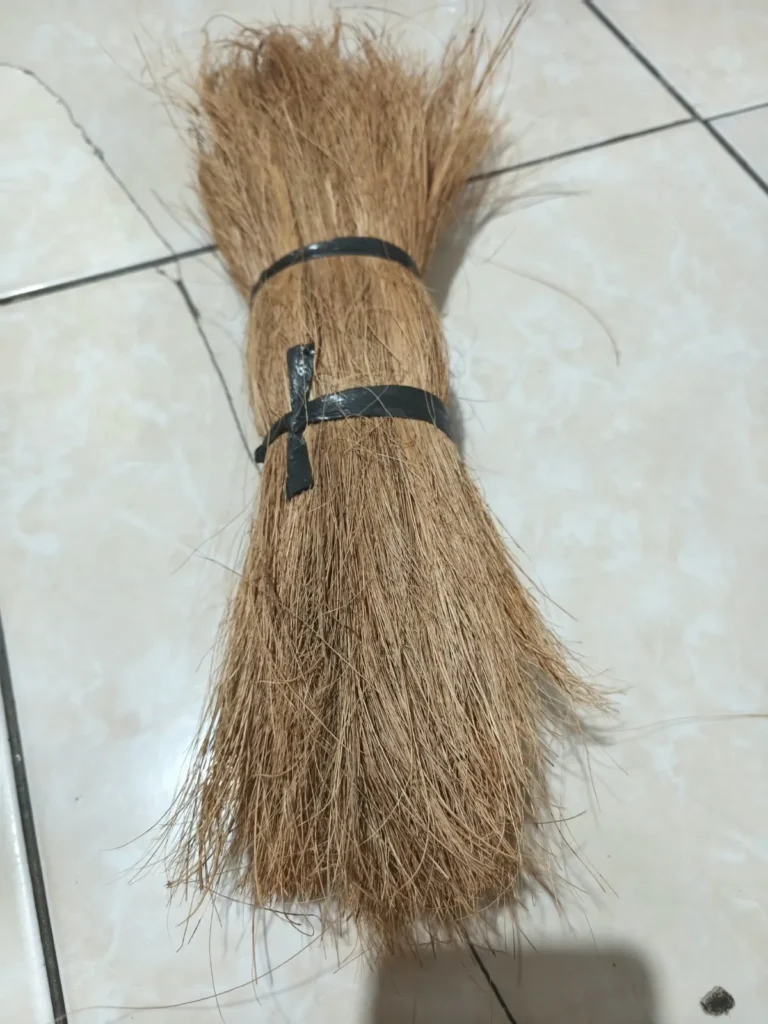
Coco bristle is the longest and strongest fiber extracted from a mature coconut husk — distinct from the shorter, curled fiber used for mattress and upholstery padding. It’s stiffer, coarser, and holds its shape under repeated sweeping pressure, which is exactly why it’s been the standard material for brooms and stiff brushes for generations.
Coco Bristle vs. Synthetic Bristle: Side-by-Side
Laid out factor by factor, the trade-off between natural and synthetic fiber becomes easier to reason about than picking a side on “natural vs. plastic” in the abstract:
| Factor | Coco Bristle | Synthetic (Nylon/PP) |
|---|---|---|
| Stiffness when wet | Holds rigidity | Softens slightly, varies by grade |
| Moisture resistance | Absorbs water, dries slower | Doesn’t absorb, resists mildew |
| Biodegradability | Breaks down naturally | Does not biodegrade |
| Fiber uniformity | Natural variation batch to batch | Exact, repeatable diameters |
| Colorability | Natural tone, limited dye uptake | Consistent, dyes reliably |
| Cost at scale (bulk brooms) | Typically lower | Typically higher |
| Source material | Renewable, byproduct of husk processing | Petroleum-derived |
Neither column wins outright — a stiff outdoor broom and a precision industrial brush are solving different problems, and the material that’s “better” is whichever one matches the job.
How Coco Bristle Is Extracted and Graded
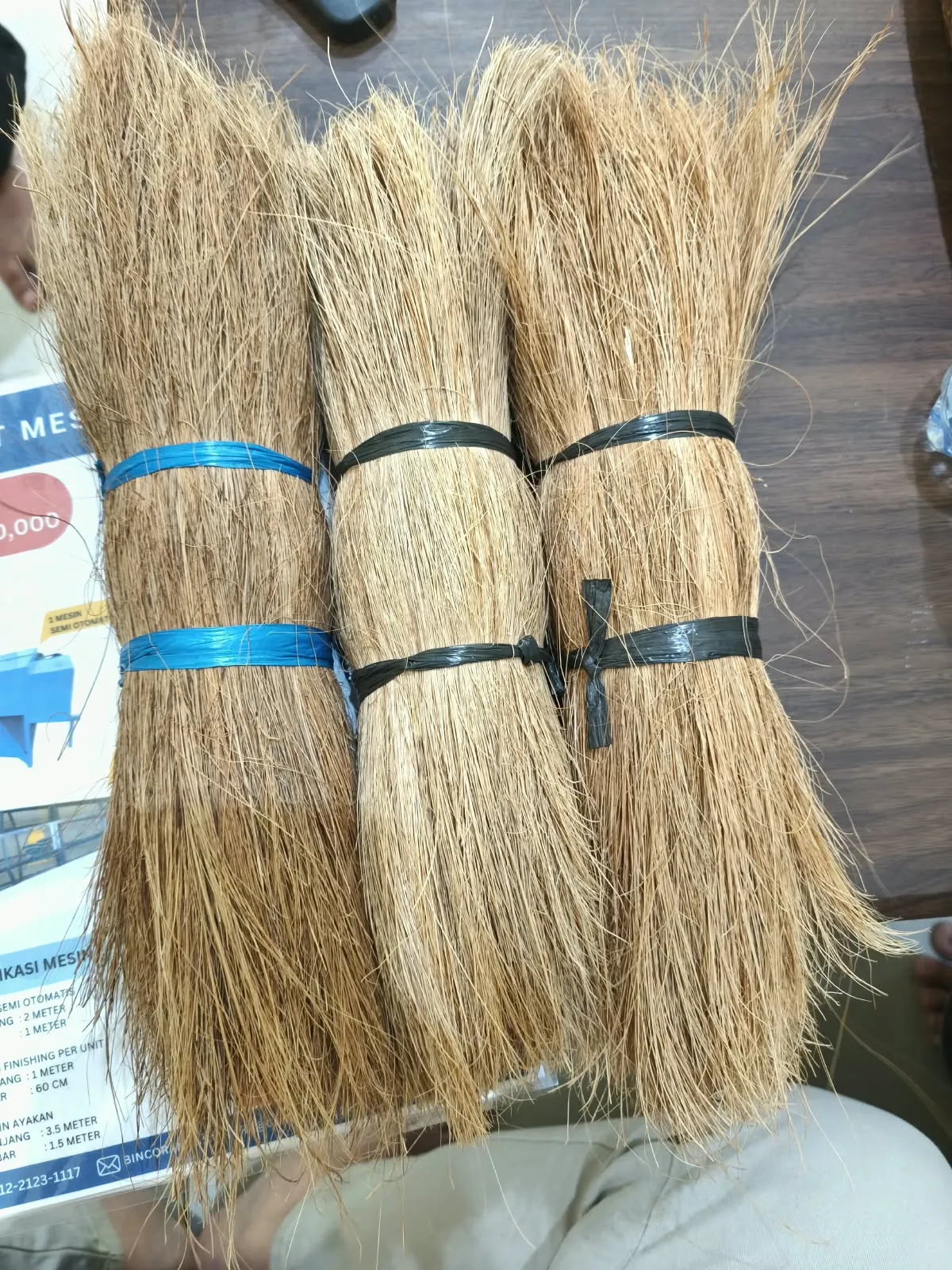
Getting from a coconut husk to export-ready bristle involves separating fiber types that all start out tangled together. Husks are first retted — soaked to loosen the outer material — then mechanically decorticated to pull the fiber free from the pith. That raw fiber is a mix of lengths: the longest, straightest strands are combed out and sorted as bristle fiber, while the shorter, curlier remainder becomes the mattress-padding-grade fiber sold separately. From there, bristle is graded primarily by cleanliness and color consistency, usually through a tiered system — most Indonesian exporters use some version of a multi-tier grading scale, though the exact tiers and what qualifies for each one vary by supplier. This is worth asking about directly rather than assuming: “top grade” from one exporter isn’t necessarily comparable to “top grade” from another. Beyond the tier label itself, ask how grading is actually performed — by eye, against a reference sample, or with any instrumented check — since a supplier who can explain their process in specific terms is generally a safer bet than one who just hands you a grade name.
Coco Bristle in Blended Products
A lot of finished brush and broom products don’t pick one material exclusively — they blend coco bristle with synthetic fiber to get characteristics neither one delivers alone. A common pattern is coco bristle for the outer sweeping edge, where stiffness and sweep performance matter most, paired with a synthetic core or backing for structural durability and moisture resistance where the bristle meets the handle. Manufacturers targeting an eco-friendly market position sometimes go the other direction: a mostly-natural product with a small amount of synthetic fiber blended in purely to hit a specific stiffness or wear-resistance spec that pure coco bristle can’t quite reach on its own. If you’re not sure which approach fits your product, it’s worth prototyping both a pure and a blended version before committing to a full production run.
Where Natural Coco Bristle Wins
- Stiffness and sweep performance. Coco bristle keeps its rigidity even when wet, which matters for outdoor brooms and industrial sweeping tools.
- Biodegradability. A finished product made with coco bristle breaks down naturally at end of life; synthetic bristle doesn’t.
- Renewable sourcing. It’s a byproduct of coconut husk processing, not a petroleum derivative — a real point of difference for brands positioning as sustainable.
- Cost at scale. For basic household and agricultural brooms, natural fiber is often the more economical raw material once you’re buying by the ton.
Where Synthetic Bristle Wins
- Moisture resistance. Nylon and PP fibers don’t absorb water or mildew, which matters for brushes used in constantly wet environments.
- Uniformity. Manufactured fiber comes in exact, repeatable diameters — useful when a product spec calls for very tight tolerances.
- Colorability. Synthetic fiber takes dye consistently; natural fiber’s color varies batch to batch.
So Which Should You Choose?
If you’re manufacturing outdoor brooms, agricultural sweeping tools, traditional household brushes, or anything marketed on natural/eco-friendly positioning, coco bristle is usually the better raw material. If you’re manufacturing brushes for constantly wet or chemically harsh environments, or need exact fiber tolerances, synthetic fiber may serve you better — some manufacturers blend both in the same product for exactly this reason.
Matching Bristle to the Product You’re Building
“Coco bristle” covers a range of end products, and the grading priorities shift depending on which one you’re manufacturing. A stiff outdoor broom cares most about rigidity and length consistency — a slightly duller color or a bit of natural variation doesn’t hurt the finished product’s performance. A deck scrub brush or a horticultural brush, by contrast, often needs a shorter, denser trim, so fiber that would be graded as premium for a broom might get trimmed down and sold at a different price point for a brush application. Industrial sweeping equipment sits somewhere in between: length matters less than durability under repeated mechanical wear, which is one area synthetic blends often outperform pure natural fiber. Telling your supplier which of these categories you’re building for — not just “brush” or “broom” in general — usually gets you a more useful grading conversation than asking for their “best” fiber without context.
Packaging and Handling During Transit
Coco bristle typically ships compressed into bales or mesh sacks rather than loose, both to save container space and to keep the fiber from tangling and matting during transit. Unlike whole coconuts, dried bristle fiber doesn’t continue to respire in transit, but it’s still vulnerable to moisture: a container that sweats due to temperature swings between port stops can dampen bales near the container walls, and damp bristle left compressed for weeks is a mold risk by the time it’s unloaded. Buyers importing into humid destination climates should ask suppliers about moisture-barrier packaging (a plastic liner inside the outer sack, for example) rather than assuming standard mesh packaging is sufficient for every route. It’s also worth asking how bales are stacked and secured inside the container — loosely packed bales that shift during a rough crossing can compress unevenly, which shows up later as inconsistent density when the fiber is unpacked and weighed on your end.
Regulatory and Market Trends Worth Watching
Material choice in this category isn’t purely a performance decision anymore. A growing number of markets have introduced extended producer responsibility (EPR) rules and single-use plastic restrictions that raise the compliance cost of durable plastic components in consumer products, without necessarily banning them outright. That shift doesn’t eliminate synthetic bristle’s technical advantages, but it does change the cost-benefit math for manufacturers selling into those markets — a natural-fiber product that was purely a sustainability marketing choice five years ago can now also be the lower-compliance-cost choice. Buyers exporting finished brush products should check the current rules in their destination market rather than assuming the calculus that applied a few years ago still holds.
What to Check When Sourcing Coco Bristle
- Grading system. Reputable suppliers grade bristle by cleanliness — ask how their tie system works and what separates their top grade from lower ones.
- Fiber length consistency. Inconsistent lengths mean more waste on your production line. Ask for a sample before committing to a full container.
- Washed vs. unwashed. Washed fiber costs more but arrives cleaner and more consistent — worth it for most finished-product manufacturing.
- Moisture content at shipment. Bristle packed too wet can develop mold in transit. Ask what moisture level the supplier ships at and how it’s verified.
- Supply reliability. As with any raw material, a supplier who can commit to a fixed monthly capacity is worth more long-term than one offering a slightly lower one-time price.
Where CelebesAgro Fits In
CelebesAgro sources coco bristle fiber from our own 1,300-hectare plantation in Indonesia, with a standing monthly supply capacity of 10 containers — built for manufacturers who need a dependable raw material partner, not a one-off spot supplier. Because we control sourcing from our own husk supply rather than buying loose fiber on the open market, we can work with you on the grading and cleanliness level your specific product needs, and back it with Sucofindo inspection documentation for your records.

Sourcing for your next production run? See our Coco Bristle specifications, or chat with us directly on WhatsApp.