
Get the HS code wrong on a semi husked coconut shipment, and customs won’t necessarily reject it outright. They’ll just hold it while someone figures out why the declared code doesn’t match what the invoice says is inside. CelebesAgro ships semi husked coconut from its own plantation, and this is the documentation conversation we have with buyers before every order clears port.
The primary HS code for semi husked coconut is 08011910 (also seen as 0801.12.00 or 08011990 depending on the customs system). Beyond the code, a standard shipment needs five documents: Commercial Invoice, Packing List, Bill of Lading, Certificate of Origin, and a Phytosanitary Certificate.
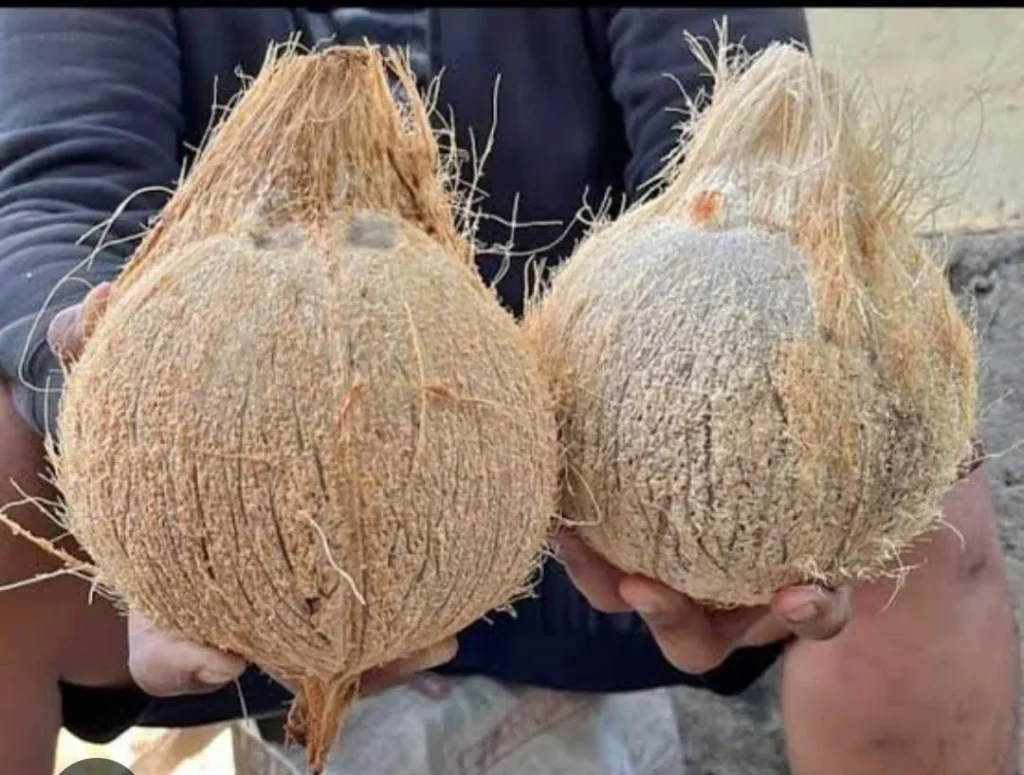
What Documents a Semi Husked Coconut Shipment Needs
Commercial Invoice
Buyer, seller, product description, quantity, price, and trade term. Customs uses it to assess duty. For semi husked coconut, the description matters more than you’d think: “semi husked coconut” and “fresh coconut” describe two different products for customs purposes, even though a customs officer glancing at a photo might not immediately tell them apart.
Packing List
How the shipment was actually packed, piece count, weight, container number, cargo marks. Customs checks this against what’s physically in the container, so a description that drifts from the invoice is exactly what gets a shipment flagged.
Bill of Lading
Issued once the shipping line has the cargo on board, this is what lets you (or your bank, under a letter of credit) take possession at the destination. It needs to agree with the invoice and packing list on both quantity and description.
Certificate of Origin
Proof the coconuts were grown and processed in Indonesia, issued by a local chamber of commerce. Some destination markets use it to apply preferential duty treatment. It needs the same product wording as everything else in the set, which sounds obvious until you’ve seen how often it isn’t.
Phytosanitary Certificate
Semi husked coconut is a fresh plant product, so most countries want confirmation it’s been inspected and is free of pests before they’ll release it. Indonesia’s plant quarantine authority (BARANTAN) issues this. Skip it, or let it lapse before the shipment arrives, and expect the container to sit while someone arranges a re-inspection.
The HS Code, and Why It’s Different from Fully Husked or Desiccated Coconut
HS heading 0801.19 groups fresh or dried coconuts by how much husk has been removed and how they’ve been processed, and that’s exactly where semi husked coconut gets confused with its neighbors. A fully husked coconut, a desiccated coconut, and a semi husked one aren’t interchangeable for classification purposes, even though a buyer new to this market might use the terms loosely in an email inquiry.
We used to assume this confusion lived entirely on the buyer’s side. Then a shipment got questioned because the freight forwarder’s paperwork described it as “fresh coconut” (a broader, less specific term) while the actual product and the phytosanitary documentation both said semi husked. Nothing was fraudulent about it. It was a shorthand that saved someone a few words on a form, and it cost two extra days of customs review to sort out.
If you want the physical distinction between semi husked and fully husked coconut (husk thickness, shipping durability, what buyers actually get in each case), we cover that separately in Semi Husked vs. Fully Husked Coconut. This piece is about the paperwork, not the product itself.
Desiccated coconut deserves a separate mention here, because it sits under a different HS heading entirely (0801.11 for dried coconut versus 0801.19 for fresh) and it’s a processed product, shredded and dried, not a whole nut with the husk partially removed. Buyers occasionally ask us for a quote on “dried semi husked coconut,” which doesn’t really describe a product that exists. If what you actually need is desiccated coconut, that’s a different classification, a different supplier conversation, and outside what we ship.
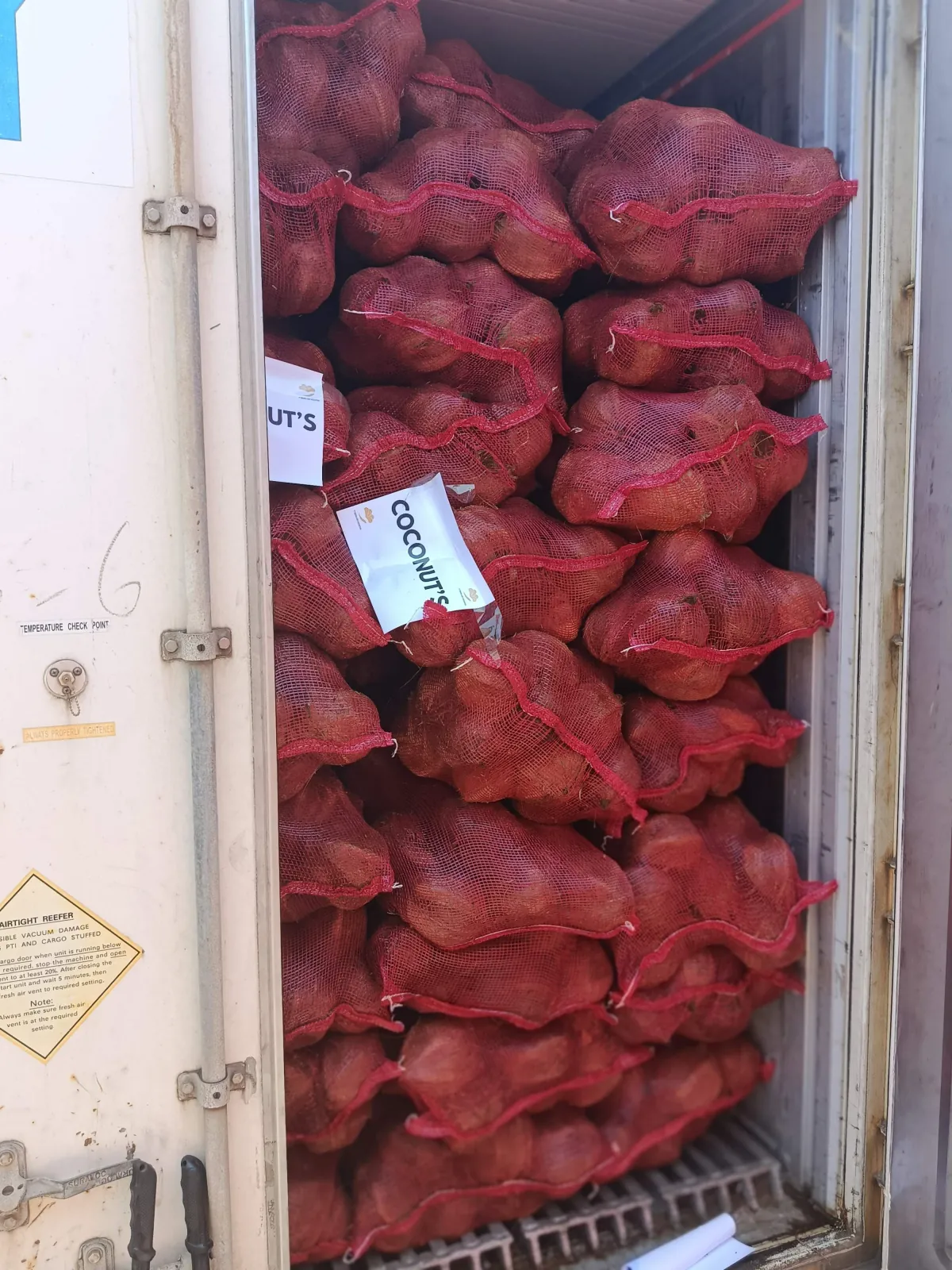
What CelebesAgro Prepares as the Exporter
CelebesAgro sources semi husked coconut from its own 1,300-hectare plantation and a small number of vetted local partners, not through a rotating chain of smallholder brokers assembling a shipment from wherever stock happens to be available that week. That matters for documentation the same way it matters for the coconuts themselves: when we write a weight range on an invoice, it’s tied to what we actually grew and sorted, not to a description passed along from three hands up the chain.
Our coconuts run 0.7 to 1.3 kg per piece, and we state that range directly rather than sorting into grade letters that vary from supplier to supplier. On the certification side, we hold Sucofindo pre-shipment inspection for quality and quantity verification, along with BPOM and Halal Indonesia certification, both genuinely relevant here since semi husked coconut is a food-adjacent product in a way cocopeat and coco bristle aren’t. We’re also set up to supply around 10 containers a month on a consistent schedule, so the documentation process runs the same way whether it’s your first order or your tenth.
If you want the product specs behind this (weight range, applications, sourcing story), those live on our Semihusked Coconut product page.
The same consistency applies to how a container gets sealed and logged before it leaves our yard. Every shipment gets a seal number recorded against the packing list at loading, not filled in later from memory. It’s a small procedural habit, but it’s the kind of detail that matters if a buyer’s customs broker ever asks whether a container was opened somewhere between Indonesia and the destination port.

What You Still Need to Arrange on Your End
Some of this is on the buyer, not the exporter, and it’s better said plainly than discovered mid-shipment.
Import permits or licenses. Many countries require an agricultural import permit or registered importer status before a shipment of fresh coconut can clear customs. That’s tied to your business registration in your own country, so no exporter can secure it for you.
Biosecurity clearance. A valid Indonesian phytosanitary certificate doesn’t guarantee your destination’s plant protection agency skips its own inspection on arrival. Rules shift, sometimes yearly, so confirm with your local agency or customs broker before the shipment leaves rather than after.
Customs broker coordination. Someone on your end needs the full document set in hand, matched to what your broker’s system expects, before the container arrives. A flawless Certificate of Origin doesn’t help much if it lands on a desk two days after the ship has already docked.
Common Mistakes That Delay a Shipment
Most delays we’ve seen trace back to one of four issues, and none of them are about the coconuts themselves.
Product description mismatch. The invoice says “semi husked coconut,” the Certificate of Origin says “fresh coconut,” and the packing list says “coconut, partially dehusked.” Three phrasings of one product across three documents reads as inconsistency to a customs officer scanning for problems, whatever the intent behind the wording.
Missing or outdated phytosanitary certificate. A certificate issued for an earlier shipment doesn’t cover a new one. If it’s expired or references the wrong lot by the time the container is ready, that’s functionally the same as not having one.
Weight or grade basis that doesn’t match the actual batch. Quoting one weight range and shipping a batch that runs noticeably different isn’t just a customer-service problem. It’s a documentation problem too, since the invoice and packing list are supposed to reflect what’s actually in the container.
Certificate issued to the wrong exporter entity. A Certificate of Origin naming one company while the invoice comes from a differently named entity is enough to stall a shipment until someone explains the mismatch, even when it’s an honest clerical slip.
A shipment flagged over any of these doesn’t clear in an afternoon. Expect it to sit at port for days, sometimes close to two weeks, while corrected paperwork gets resubmitted, and every one of those days adds a demurrage charge to whatever delay hits your own downstream schedule. None of that reflects the quality of the coconuts. It’s a wording problem that should have been caught before the container left Indonesia.
Want to talk documentation for your own order, or pricing and MOQ? Message us on WhatsApp. If you specifically want the pricing side, FOB versus CIF, and container math, we cover that separately in Semi Husked Coconut Wholesale Price rather than repeating it here.
Frequently Asked Questions
What is the HS code for semi husked coconut?
The primary code is 08011910, under HS heading 0801.19 for fresh or dried coconuts. Some customs systems reference it as 0801.12.00 or 08011990 instead, so confirm the exact subheading with your customs broker for your specific destination.
Does semi husked coconut need BPOM or Halal certification?
It depends on the destination market’s requirements, but both are relevant for a food-adjacent product like this one. CelebesAgro holds BPOM and Halal Indonesia certification alongside Sucofindo pre-shipment inspection, since all three speak to different parts of a buyer’s due diligence.
What’s the difference in documentation between semi husked and fully husked coconut?
The document types are largely the same (invoice, packing list, bill of lading, certificate of origin, phytosanitary certificate), but the product description on every one of them needs to specifically say semi husked rather than a generic term like “fresh coconut,” or the paperwork can end up inconsistent with the declared HS subheading.
What happens if a shipment’s HS code doesn’t match its description?
Expect a manual review at minimum, which usually means the container sits at port while the mismatch gets resolved. In more serious cases, it can trigger a full re-inspection, adding real time and cost even when the product itself is exactly what was ordered.
How long does it take to prepare export documents for semi husked coconut?
For a supplier with organized records, the phytosanitary certificate and Certificate of Origin can usually be ready within a few working days of the shipment being prepared for inspection. It takes longer during a busy export season if quarantine needs to schedule a physical check, so build in a buffer rather than assuming next-day turnaround.