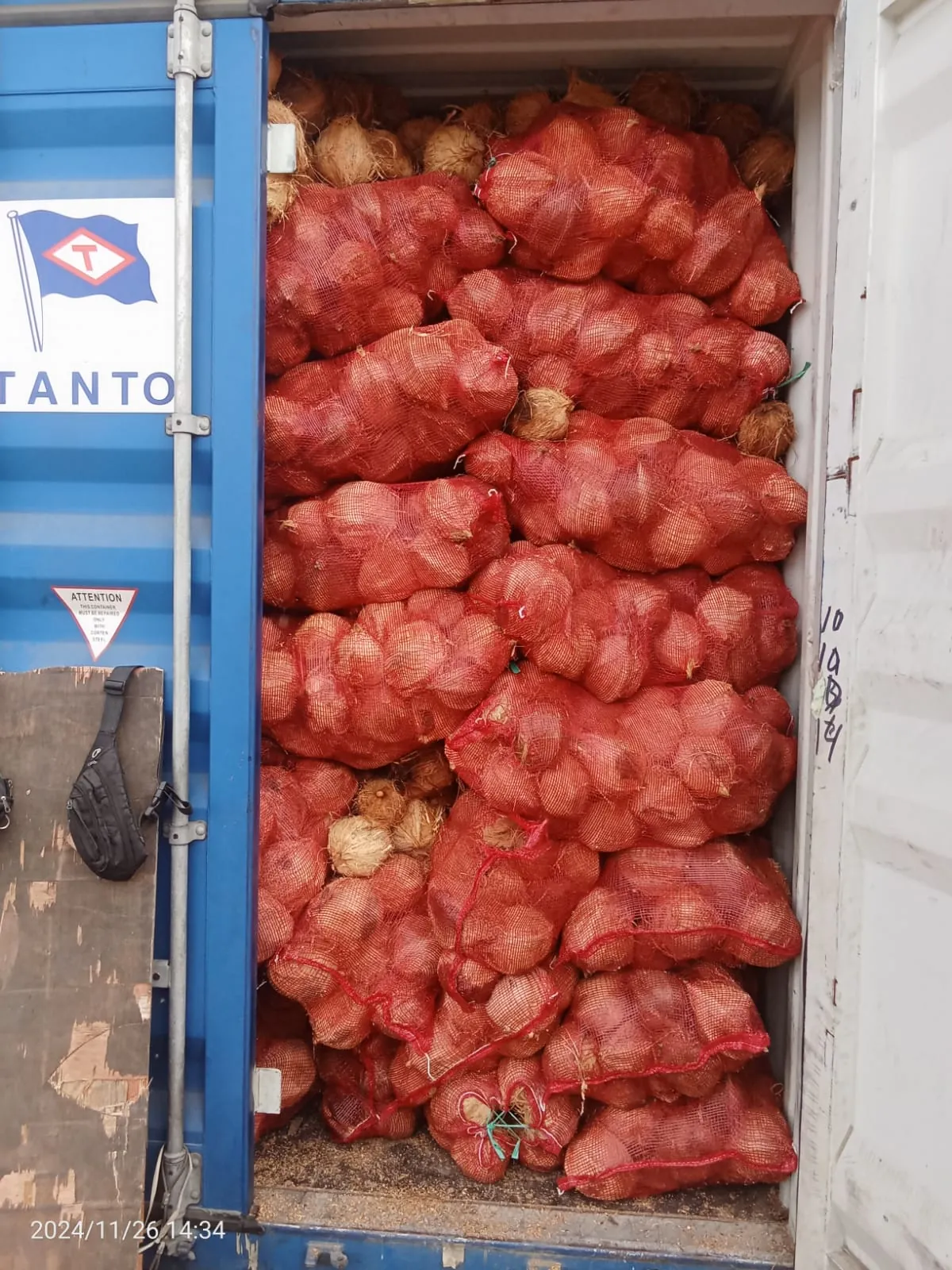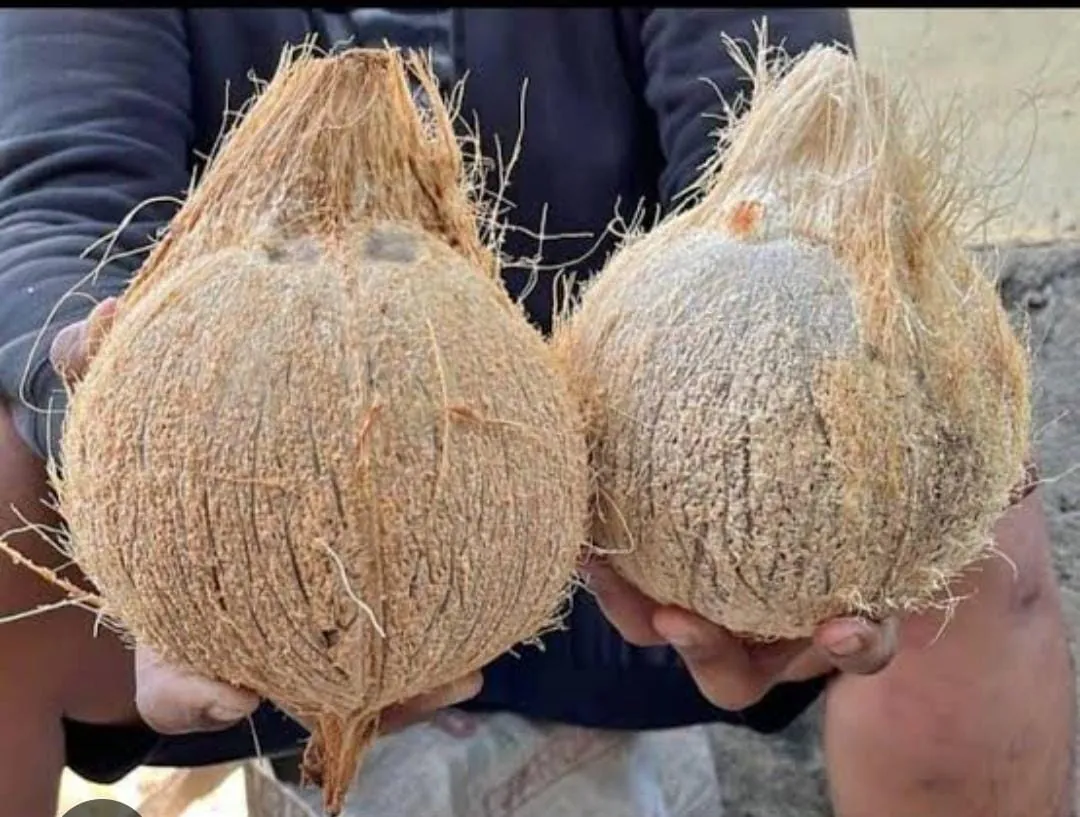
Ask five exporters how long a semi husked coconut lasts and you’ll get five different answers. Some say 30 days. Others say 60. One listing we read claimed 90. The honest answer is that shelf life isn’t a fixed property of the nut. It’s the result of how mature the coconut was, how dry the husk stayed, how it was packed, and what happened to it between the farm and your warehouse.
Supplier listings for semi husked coconut typically state a shelf life of about 30 to 60 days under cool, dry, ventilated storage, with some citing up to 60 days at 10 to 15°C. These are seller claims, not independent test results, and the clock usually starts at harvest, not at arrival. Plan your import schedule around the transit time, not the headline number.
What Suppliers Say About Semi Husked Coconut Shelf Life
We read through a few dozen B2B directory listings for semi husked coconut. The pattern is consistent enough to summarize, and loose enough that you should treat it as a rough guide only:
| Claim in listing | Conditions stated | How common |
|---|---|---|
| 30 to 45 days | Ambient, cool and dry | Common |
| 40 to 60 days | Ventilated storage | Most common |
| Up to 60 days | Cold storage, 10 to 15°C | Occasional |
| 7 to 10 days or 70 to 90 days | Not explained | Outliers |
Two things matter here. First, almost no listing says when the count begins. A 45-day figure measured from harvest leaves far less usable time than one measured from the day the container is unloaded. Second, the outliers on both ends are unexplained, which usually means someone copied a number without testing it. When you ask a supplier for shelf life, ask what they measure it from and what storage conditions they assume.
None of this is a promise from us. It’s the market picture, and it’s why you’ll want to ask every exporter, including CelebesAgro, for the harvest-to-loading timeline on your specific order.
Why a Semi Husked Coconut Lasts as Long as It Does
A mature coconut is a sealed package. The hard shell protects the kernel and water, and the husk around it acts as a shock absorber and a moisture buffer. Semi husked coconuts keep a strip of that husk, mostly around the ends, which is exactly where the shell is most exposed. That’s the reason buyers choose them over fully dehusked nuts for long shipments. We cover that trade-off in our comparison of semi husked and fully husked coconut.
Shelf life ends when one of three things happens: the husk or shell gets wet and starts to mold, the nut loses too much water and the kernel dries out, or the eyes crack and let in bacteria. Each of those has a different cause, and each points to a different handling rule.
Maturity at harvest
Older nuts keep longer. A coconut harvested at 11 to 12 months has a harder shell and a drier husk than one picked early. If a supplier can’t tell you the age range of the nuts, that’s a gap in their quality control, because maturity drives both shelf life and the water-to-kernel ratio your processing line depends on.
Husk moisture
A wet husk is the fastest route to mold. Nuts that sit on damp ground after harvest, or get rained on in an open yard, carry that moisture into the bag. Good exporters dry or air the nuts before bagging and keep stock off bare soil.
Temperature and ventilation
Heat speeds up water loss and fungal growth. Sealed, unventilated space makes it worse, because the nuts respire and trap humidity. This is why almost every listing says “cool, dry, well-ventilated” and why the cold-storage figure is longer than the ambient one.
Storage Conditions That Protect the Nuts
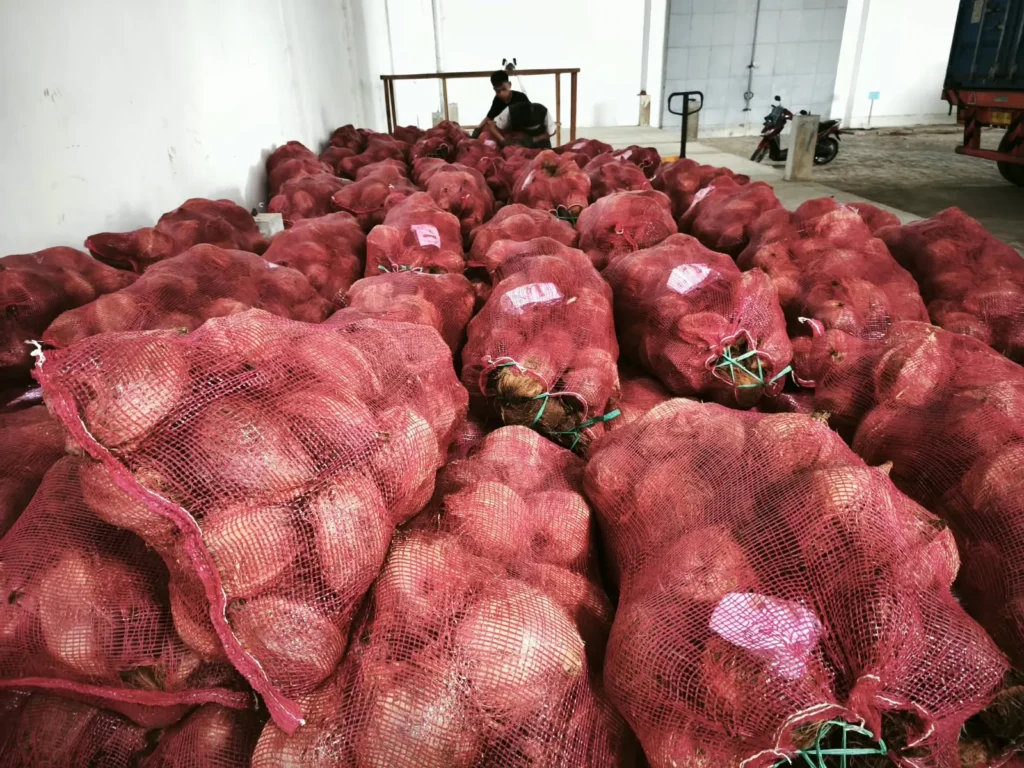
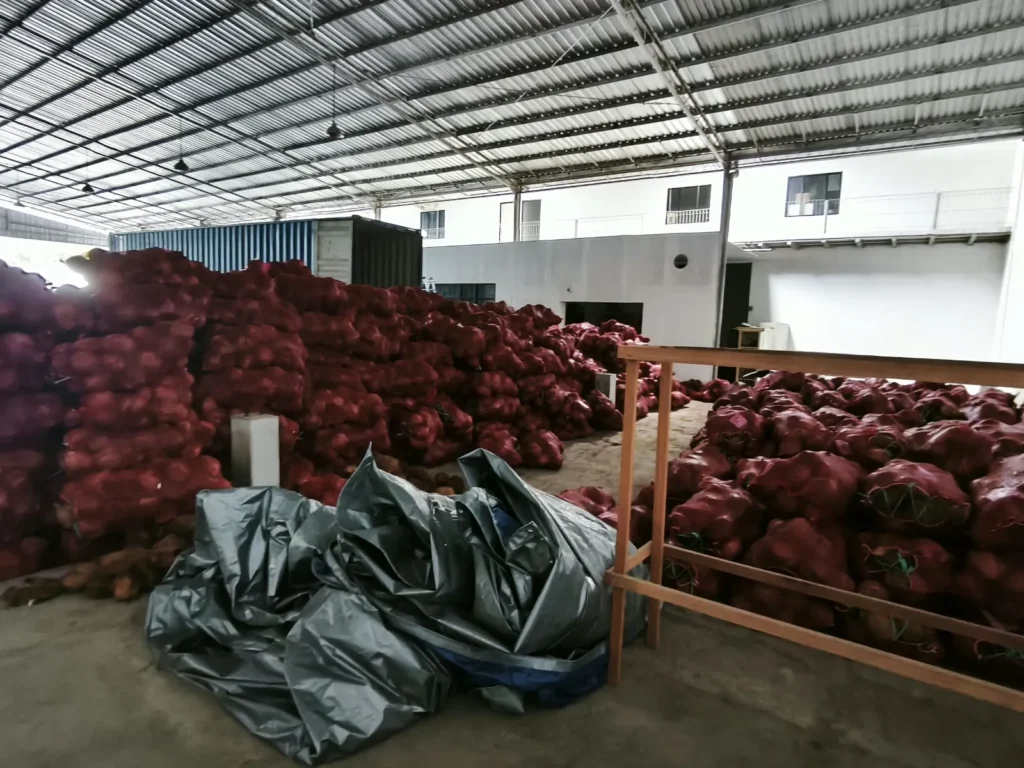
The advice below comes from common industry practice and the storage notes in supplier listings. It’s the setup most exporters and importers describe, not a certified standard.
- Keep them off the floor. Use pallets or racks. Concrete sweats, and bags that touch it pick up moisture from below.
- Allow airflow around the stack. Leave gaps between rows and away from walls so the bags can breathe.
- Avoid direct sun and rain. A roof and shade matter more than most buyers expect.
- Aim for cool, not cold and wet. Some listings recommend 12 to 15°C with 75 to 80% humidity for the longest hold. Without refrigeration, a shaded, ventilated warehouse is the realistic target.
- Use breathable bags. Mesh or PP sacks hold the weight and let moisture out. Sealed plastic traps it.
- Rotate stock. First in, first out. Don’t let old nuts sit under new ones.
If you’re holding stock for resale rather than processing it right away, check a few nuts from the middle of the stack every week. Shake them. A nut that sounds dry and light has lost water. A nut with a sour smell or a soft spot at the eyes should be pulled out before it spreads.
What Happens During the Voyage
Ocean transit is where most of the shelf life gets spent. Indonesia to the Middle East or South Asia can take two to three weeks door to door. To East Asia or Europe, three to six weeks is not unusual once you count port waiting, customs and inland trucking. The nuts keep respiring in the container the whole time.
Container condition matters as much as the nuts. A dry container with working ventilation openings is the baseline. Condensation, known as container rain, forms when warm humid air inside hits a cold steel roof, and it can soak the top layer of bags. Some buyers ask for desiccant or ventilated loading to reduce this risk. Others book a reefer for longer routes, which costs more but gives temperature control.
This is why the number to compare isn’t the shelf life on a listing. It’s the shelf life minus the days between harvest and your warehouse door. A supplier quoting 45 days on a 30-day voyage is giving you very little room. Our guide on wholesale price and container math shows how loading format changes both cost and handling.
Dry Container or Reefer: How to Decide
There’s no single right answer, and anyone who tells you otherwise is selling one of them. Here’s how the decision usually breaks down.
| Factor | Dry container | Reefer container |
|---|---|---|
| Freight cost | Lower | Noticeably higher |
| Temperature control | None, relies on ventilation | Set and held |
| Best for | Short and medium routes | Long routes, warm seasons |
| Main risk | Heat and condensation | Power or equipment failure |
| Typical buyer | Processors with fast turnover | Buyers who store before use |
If your plant turns stock within a week or two of arrival, a dry container with good ventilation is often enough. If you plan to hold the nuts for a month, or you’re shipping across the equator in the hot season, a reefer starts to look like cheap insurance. Ask your forwarder for both quotes and compare the freight difference against the value of the cargo.
How to Check Quality When the Container Arrives
Don’t wait until the nuts are on the line to find problems. A short inspection at the dock catches most of them while you still have a claim.
- Look at the bags. Wet patches, stains or mold on the outside are a warning before you open anything.
- Open a few bags from different positions. Top, middle, bottom, and near the doors. Condensation hits the top layer first.
- Check the husk. It should be dry and firm. Black or green fuzz means mold.
- Shake the nuts. You should hear water. Silence suggests dryness, a sloshing that’s too loose can mean age or cracks.
- Crack a sample. The kernel should be white, firm and fresh-smelling. Pink, grey or sour-smelling flesh is a rejection reason.
- Count and photograph. Record how many nuts per sample failed, with date and bag location, before you do anything else.
Agree the acceptable defect rate in writing before you ship. A clause that says “up to X percent damaged or sprouted nuts per container” saves long arguments later. Our guide to the first-order import process covers where that clause sits alongside payment terms and sample approval.
Sprouting, Mold and Other Common Problems
A few failures account for most complaints on semi husked cargo.
Sprouting. Mature coconuts germinate if they stay warm and humid long enough. A small shoot through the eye is a sign the nut is old or the voyage was long and humid. A few sprouted nuts per container are normal in the trade; a lot is not.
Mold on the husk. Surface mold on the fibre is often cosmetic if the shell underneath is intact, but it signals the cargo got wet. Check whether the issue is concentrated near the container roof or doors.
Cracked shells. These come from rough handling or loose stacking, and cracked nuts spoil fast. Tight, even loading reduces them. Pallet loading, where used, also helps, as does careful unloading.
Water loss. Nuts that arrive light and dry have either been stored too long or too hot. Weigh a sample against the specification. Our stated weight for the product is 0.7 to 1.3 kg per nut, so a sample that falls well below that range tells you something about handling or age.
Questions to Ask Your Supplier Before Ordering
These turn a vague “45 days” into something you can plan around:
- How many days pass between harvest and loading?
- Are the nuts dried or aired before bagging?
- What bag type and bag weight do you use?
- Is the container ventilated, and can you load with desiccant if I ask?
- What’s the estimated transit time to my port, and what’s the plan if the vessel is delayed?
- What is the acceptable damage rate, and how are claims handled?
- Can you share photos of the loading process for my order?
A supplier who answers these quickly and specifically has done it before. One who answers with “don’t worry, it’s fine” hasn’t.
Where CelebesAgro Fits In
We grow semi husked coconuts on our own 1,300-hectare plantation and prepare them for export ourselves, so the harvest-to-loading timeline is something we control and can discuss openly, not something we have to chase through a chain of traders. Our semi husked coconut is supplied at 0.7 to 1.3 kg per nut, and we’re set up to ship up to 10 containers a month. For documentation, see our guide to semi husked coconut export documents.
We don’t publish a guaranteed shelf life, because it depends on your route, your season and your storage. What we do is give you a clear picture of the timeline and packing for your order before you commit. Packaging format and loading details are agreed per order.
Chat with us on WhatsApp with your destination port and how long you plan to hold the stock, and we’ll walk through the options.
Frequently Asked Questions
How long does semi husked coconut last?
Supplier listings usually state 30 to 60 days under cool, dry, ventilated conditions, with up to 60 days in cold storage at 10 to 15°C. These are seller claims rather than test results, so confirm the figure and the starting point with your supplier.
Does semi husked coconut need refrigeration?
Not always. Many shipments travel in ventilated dry containers. A reefer helps on long routes, in hot seasons, or when you plan to store the nuts for several weeks before use.
Why is there mold on my coconuts after shipping?
Usually moisture. The husk was damp when bagged, condensation formed inside the container, or the bags were stored on a wet floor. Check where in the container the mold is concentrated to find the cause.
How should I store semi husked coconuts?
Keep them in breathable bags, raised off the floor, in a shaded and ventilated space with gaps for airflow. Avoid rain, direct sun and sealed plastic, and use older stock first.
Is it normal for a few coconuts to sprout?
A small number is normal on long voyages, because mature nuts can germinate in warm, humid conditions. Agree an acceptable defect rate in writing before shipping.