
If you’re sourcing coconuts for coconut water, milk, desiccated coconut, or virgin coconut oil (VCO) production, one of the first decisions you’ll face isn’t the grade or the price — it’s the husk. Semi husked and fully husked coconuts travel differently, cost differently, and process differently once they reach your facility. It’s a decision that’s easy to overlook when you’re comparing quotes side by side, but it shapes everything from your freight cost per container to how much unusable stock you’re left sorting out on arrival. Here’s what actually matters when you’re comparing suppliers.
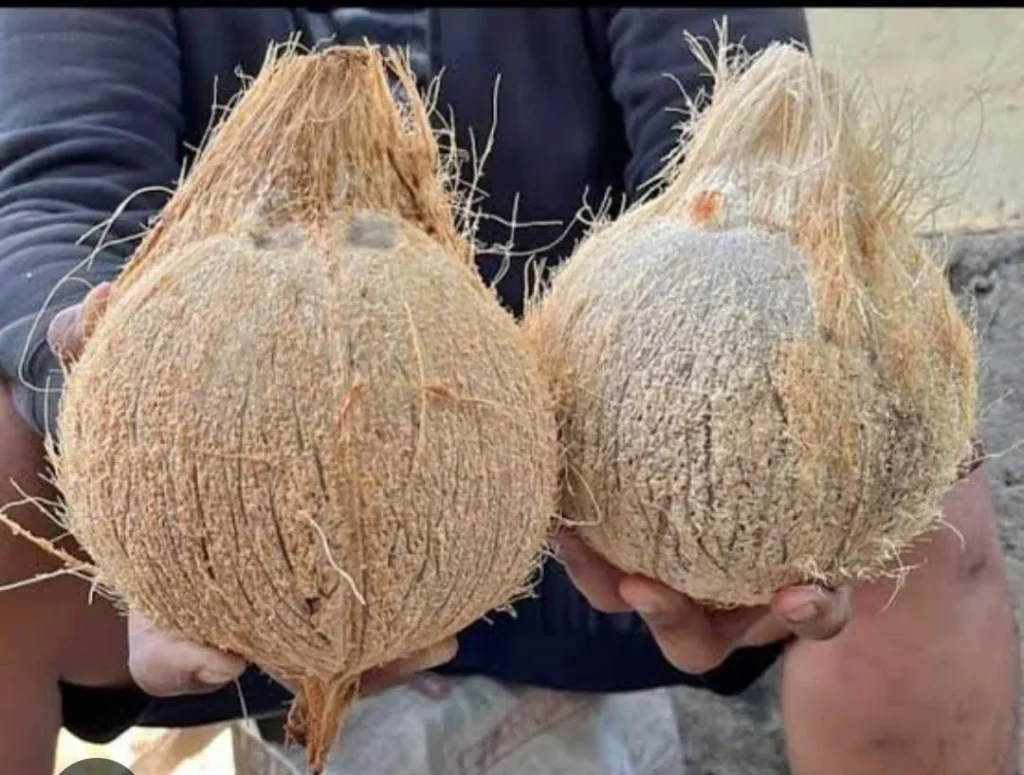
What Is a Semi Husked Coconut?
A semi husked coconut is a mature coconut that has had its outer husk partially removed, leaving a layer of fibrous husk around the hard shell intact. That remaining layer acts as natural padding: it absorbs impact during loading, stacking, and long ocean transit, and it slows moisture loss so the coconut arrives in better condition after weeks at sea.
What Is a Fully Husked Coconut?
A fully husked coconut has had all of its fibrous husk removed, leaving only the hard shell. It’s lighter and more compact — which matters for freight cost per unit — but it also loses the protective cushioning the husk provides, and it’s more exposed to cracking, drying out, and mold if handling or ventilation isn’t well controlled.
Semi Husked vs. Fully Husked: Side-by-Side Comparison
The differences add up once you’re loading a full container rather than a single nut. Here’s how the two compare on the factors that actually affect your landed cost and rejection rate:
| Factor | Semi Husked | Fully Husked |
|---|---|---|
| Protective husk layer | Retained around the shell | Fully removed |
| Weight per piece | Higher — husk fiber adds bulk | Lower, more compact |
| Freight cost per unit | Slightly higher | Slightly lower |
| Breakage risk in transit | Lower — husk absorbs impact | Higher — shell takes direct impact |
| Moisture retention | Better — husk slows drying out | Lower — shell dries out faster |
| Ease of handling and grading | Easier — husk gives handlers grip | Harder — smooth shell is slippery |
| Best suited for | Container importers, longer routes | Buyers prioritizing minimum freight weight |
None of these differences is dramatic on a single coconut. Multiplied across a 20-foot or 40-foot container, though, even a small percentage of breakage or moisture loss changes your effective cost per usable kilogram — which is why most processors weigh husk retention against freight savings rather than choosing on price per nut alone.
Why Most Buyers Choose Semi Husked
For buyers importing by the container, semi husked coconut is usually the more forgiving choice. The retained husk layer reduces breakage and quality loss over a 20–40 day shipping window, which matters more than the small freight saving from a fully husked shell once you factor in rejected or spoiled stock at the port. It’s also easier to grade and inspect — the husk fibers give handlers something to grip without damaging the nut itself. In practice, that trade-off usually tips toward semi husked once a buyer has been burned by a shipment with unexpected losses: a container that arrives with even a handful of cracked or moldy nuts can turn a marginal freight saving into a net loss once you account for sorting labor and unusable stock.
Terms Buyers Often Mix Up
Because coconut terminology varies by region and by which part of the industry you’re talking to, it’s easy to end up comparing the wrong products. A few distinctions worth clarifying before you request quotes:
- Semi husked vs. young coconut. A young coconut (sometimes sold as a “drinking coconut” or “buko”) is harvested early, before the shell hardens, specifically for its water. Semi husked coconuts are mature, harvested for their meat and oil content — a different product entirely, so don’t compare a semi husked coconut spec sheet against a young coconut supplier’s.
- Semi husked vs. “brown coconut.” “Brown coconut” is an informal term some buyers use interchangeably with fully husked or semi husked mature coconut. Always ask a supplier to confirm husk condition explicitly rather than relying on this label, since it isn’t standardized.
- Semi husked vs. desiccated coconut. Desiccated coconut is a finished product — dried, shredded coconut meat — not a whole nut. If you’re buying semi husked coconut, you’re buying the raw material a desiccating facility would process further, not the finished product itself.
Common End Uses
- Coconut water extraction
- Coconut milk and cream production
- Desiccated coconut manufacturing
- Coconut flour production
- Virgin coconut oil (VCO) processing
- Beverage and cosmetics industry raw material
How Semi Husked Coconuts Are Processed and Packed for Export
Getting from a harvested coconut to an export-ready container involves a few consistent steps regardless of supplier, though the care taken at each one is what separates a reliable shipment from an inconsistent one. Coconuts are harvested at full maturity — usually indicated by husk color and a dry, dull sound when tapped — since immature nuts spoil faster and yield less usable meat. The husk is then partially removed by hand or machine, leaving enough fiber intact to protect the shell without adding unnecessary weight. Workers sort by size and check for cracks, mold, or insect damage before the batch is loaded into breathable sacks or bulk-stacked in the container, depending on the buyer’s packaging preference. At CelebesAgro, this process happens close to harvest — coconuts move from our own plantation to sorting and loading without passing through an intermediate trader’s warehouse, which shortens the time between harvest and shipment and reduces the handling that tends to introduce damage.
What Happens During a 20–40 Day Ocean Voyage
Once loaded, a container of semi husked coconut typically spends two to six weeks at sea depending on the destination port. Ventilation is the main variable: coconuts continue to respire and release moisture during transit, so a poorly ventilated container traps humidity that promotes mold, while too much airflow accelerates drying and shrinkage. Temperature swings between port stops also stress the husk and shell — the retained fiber layer on a semi husked coconut buffers both the physical impact of stacking and this moisture and temperature fluctuation, which is why the benefit grows with route length. Buyers shipping from Indonesia to the Middle East or Northeast Asia, for example, tend to see the clearest benefit from semi husked stock over fully husked.
Bulk-Stacked vs. Bagged: Which Packing Method Should You Choose?
Semi husked coconuts are typically loaded into a container one of two ways: bulk-stacked directly on the container floor, or packed into breathable mesh sacks stacked on pallets. Bulk stacking maximizes the number of coconuts per container and lowers cost per unit, but it also means more direct contact between nuts during the voyage, which can increase localized bruising or mold spread if one nut in the pile is already compromised. Bagged loading costs a little more per container — sacks and labor add up — but it makes inspection, partial unloading, and traceability easier: a compromised bag is isolated on sight instead of mixed into an undifferentiated pile. The right method depends on how you unload and process on your end, not on price alone, so ask which one your supplier uses by default before assuming.
What to Check Before You Import
A few questions are worth asking any semi husked coconut supplier before you commit to a container:
- Weight consistency. Ask for the actual weight range per piece, not just a “grade” label — a 0.7 kg nut and a 1.3 kg nut behave very differently in processing.
- Certification. If you’re importing into a market with halal or food-safety requirements — Malaysia and Saudi Arabia are common examples — confirm the supplier holds current Halal and food-safety certification, not just a general export license.
- Third-party inspection. A Sucofindo (or equivalent) quality and quantity certificate at the point of loading protects both sides if there’s a dispute on arrival.
- Packaging format. Confirm whether the coconuts ship in breathable mesh sacks, bulk-stacked, or another format — this affects both ventilation during transit and how easily you can unload and inspect the container on arrival.
- Supply consistency. A supplier who can commit to the same volume every month is worth more than one with a lower price and no guaranteed capacity — ask directly how many containers they can supply per month, and whether that number holds up during their off-season.
Where CelebesAgro Fits In
CelebesAgro supplies semi husked coconut at 0.7–1.3 kg per piece, sourced from our own 1,300-hectare plantation in Indonesia rather than bought in from unrelated growers. That means we control quality from the tree to the container, and we can commit to a standing capacity of 10 containers per month — not a one-off spot deal. Because everything moves through a single, controlled chain — plantation, sorting, loading — we can also support the export documentation buyers typically need on the receiving end, tied to the specific batch in your container rather than a generic template.

Have a shipment to plan? See our Semihusked Coconut specifications, or chat with us directly on WhatsApp.